


Pictures: NE Derbyshire MP Louise Sandher-Jones, Second Left, Chesterfield MP Toby Perkins, Third Left, With Chesterfield Borough Council Leader, Cllr Tricia Gilby, Third Right,
East Midlands Combined County Authority has revealed that it is expecting ‘further clarity’ on plans for the long-awaited ‘£197m’ Chesterfield-Staveley bypass scheme during the summer despite a current ‘lack of formal backing’ from the Government.
The authority has already agreed funding allocations for proposed transport investments including a groundwork investigation ahead of a major funding bid to Government for the bypass scheme, and to establish a feasibility study for improvements to the separate A61 Chesterfield-Clay Cross highways improvement scheme.
An EMCCA spokesperson said: “EMCCA is funding ground investigation work for the Chesterfield-Staveley
“This has now been extended to include adjacent land previously safeguarded for HS2, helping inform future investment options.
“While the Department for Transport has yet to make a final decision and the scheme was not included in the latest funding announcements, we expect further clarity in early summer.”
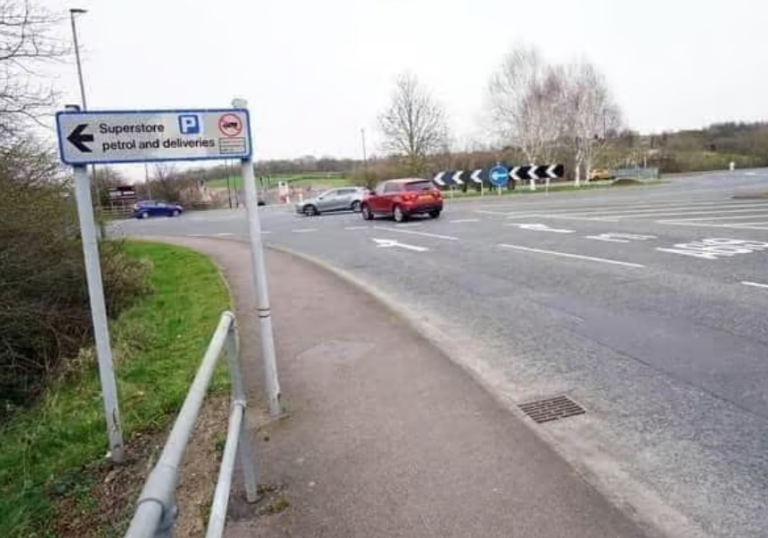
The long-awaited 5.7km Chesterfield-Staveley Regeneration Route scheme is hoped to run from the roundabout, at Sainsbury’s supermarket, on the A619, in Chesterfield, to the Heritage Green Estate before finishing at Hall Lane, in Staveley.
Labour-led EMCCA earmarked £3m of funding for the 2026-27 financial year to complete actions for a Large Local Major Submission to the Labour Government’s Department for Transport for substantial Government funding to confirm plans for the Chesterfield-Staveley Regeneration Route bypass scheme.
And the authority confirmed in February that a Chesterfield-Staveley Regeneration Route ground works investigation to establish the condition of the land for the potential scheme was underway after it allocated £2.5m of Transport for City Regions funding towards the development and investigation of options to support a business case for the scheme to release housing growth and regeneration opportunities.
The Chesterfield-Staveley Regeneration Route bypass scheme, currently overseen by EMCCA and Derbyshire County Council’s highways authority, aims to reduce traffic congestion, create new jobs and open up a growth corridor for businesses as part of a series of plans for the region.
It also hopes to provide a new 5.7km single carriageway, opening up the Staveley and Rother Valley Corridor for regeneration by facilitating development of 150 hectares of severely degraded land, bringing much needed regeneration and opportunity to deprived communities.
Derbyshire County Council originally submitted an outline business case to the former Conservative Government after working closely with Chesterfield Borough Council originally seeking £141m to support delivery of the project with a local required contribution of £25m to fund the overall scheme.
This brought the overall, estimated grand total cost for the scheme in December, 2022, to £166m but its estimated cost has now stretched to £197m.
The Government has not yet made any commitments to provide the remaining overall estimated, necessary funding to complete and get the Chesterfield-Staveley bypass scheme up-and-running.
But EMCCA stressed it will keep engaging with Government and partners to secure future funding and it has been considering further capital allocations of £5m in 2027-28, and £5m in 2028-29 for developmental stages, as well as £44m to be accessed from 2031-32 which would draw down on the hoped for final Government Large Local Major Programme grant.
The Chesterfield-Staveley bypass scheme is considered to be critical to unlocking land across the Staveley and Rother Valley Corridor, according to EMCCA, to facilitate plans for 1,500 new homes and 5,700 new jobs as set out in the Chesterfield Local Plan and a business case for the scheme was submitted to the DfT as long ago as 2023.
An EMCCA spokesperson added: “The route remains an important project for investment, connectivity and unlocking new homes, so the lack of formal backing at this stage is disappointing.
“We are therefore also exploring alternative options to ensure viable solutions remain in place, should Government support not be forthcoming.”
Chesterfield Labour MP Toby Perkins has also been pressing the Government to fund the Chesterfield-Staveley bypass scheme after raising concerns over congestion and air pollution and Prime Minister Sir Keir Starmer has acknowledged the support and the arguments for the project.
Separately, EMCCA has also looked to approve £3.5m of Government funding over 2026-27 and 2027-28 to develop and test feasibility options to determine a preferred option for a business case for further Government funding to improve the A61, between Chesterfield and Clay Cross.
The authority says it is funding early feasibility work on potential improvements to the A61 from Chesterfield to Clay Cross including the A617 junction to boost connectivity and economic growth but the overall scheme’s delivery is not expected for some years.
Feasibility work aims to determine a preferred option to develop a business case for the A61 Chesterfield to Clay Cross route with a possible £1.5m investment of funding proposed for 2026-27 and a possible £2m of funding investment proposed for 2027-28.
Derbyshire County Council appointed AECOM Infrastructure and Environmental UK Ltd to compile an A61 South of Chesterfield Strategic Review as long ago as 2020 which targeted an area from the A617 Horns Bridge roundabout in the north to the junction with the A6175 in Clay Cross in the south which leads to the M1 Junction 29.
It revealed that the area has already been subject to various previous work assessments including examining junction capacity between Horns Bridge Roundabout and Tupton for the redevelopment of the former Avenue Coking Works for housing and commerce.
An EMCCA spokesperson said: “EMCCA is funding early feasibility work on potential improvements along the A61 corridor between Chesterfield and Clay Cross, including the A61/A617 junction.
“This work will explore opportunities to improve connectivity on this key route, helping unlock jobs, housing and wider economic growth.
“The scheme is at a very early stage, so delivery would not be expected within the current funding cycle to 2032.”
EMCCA’s Transport and Digital Connectivity Committee has also backed a three-year Transport Investment Package worth £121m each year for highways maintenance to tackle potholes, worn road surfaces, footways, cycleways, street lighting, and key infrastructure repairs, while also supporting proactive maintenance to prevent future damage in the region.
The authority has also confirmed that additional funding of £13.5m per year has been approved for local neighbourhood transport projects to improve road safety, accessibility and daily travel for people’s journeys in the region with measures such as traffic calming and better signage.
EMCCA East Midlands Mayor Claire Ward said this is ‘the year of delivery for roads and transport in the East Midlands’ with over £121m invested in highways and £13.5m in local projects.