

Report by Local Democracy Reporter – Jon Cooper
Derbyshire patients are set to benefit from earlier, more efficient and potentially life-saving diagnoses after Health Minister Karin Smyth has announced the latest £237m Government investment in NHS Community Diagnostic Centres.
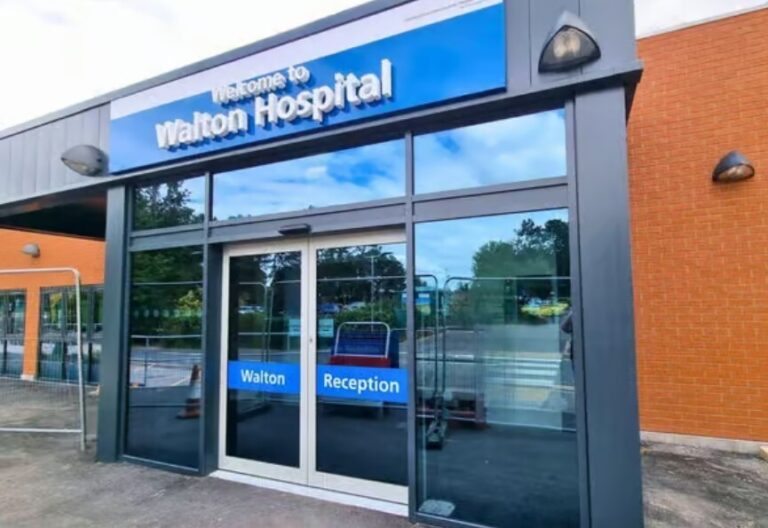
Walton Hospital’s newly-opened Community Diagnostic Centre, on Whitecotes Lane, in Chesterfield, has received a generous share of the funding to support its expansion with additional non-obstetric ultrasound, MRI and CT scanners, DEXA scanning for brittle bones, transnasal endoscopy, echo and audiology services and sleep studies.
Meanwhile, both Whitworth Hospital, on Bakewell Road, in Matlock, and the Florence Nightingale Community Hospital, on London Road, in Derby, will be among others nationwide to receive enhancements such as specialist kit, new clinic rooms or additional services such as audiology, ophthalmology and respiratory care to existing facilities.
Ms Smyth is confident the latest expansions, enhancements and equipment involving 36 centres nationwide will address concerns over waiting times, provide quicker, easier access and support earlier diagnoses in one place while easing the strain on busy hospitals with tests being carried out in a less stressful environment.
She said: “They are good news for local people who are worried about waiting times and they are really critical to helping with the £237m of funding across the country for new Community Diagnostic Centres with the expansion and enhancement for centres because they mean they are working in places that are convenient for patients.”
Ms Smyth added: “For people on waiting lists it’s really stressful and we know if people wait too long it’s critical for their outcomes.”
Walton Hospital’s £5.2m diagnostic centre was opened in September, 2025, and its latest expansion plans are part of £7.5m of agreed funding to help upgrade MRI and CT scanning and other services rather than having them housed in mobile units next to the centre.
The funding is also being spent on creating a dedicated paediatric audiology room and on introducing DEXA scanning which helps diagnose conditions like osteoporosis and assess fracture risks.
Latest overall Government plans include the opening of four new diagnostic centres in Gorton, Luton, Boston and Bideford during 2026-27, expansions at 17 centres including Walton Hospital and enhancements at 15 centres including Whitworth Hospital and Florence Nightingale Community Hospital.
Professor Stella Vig, National Clinical Director for Elective Care at NHS England, said: “We’re making it easier to access care, and our network of Community Diagnostic Centres deliver important diagnostic tests nearer to people’s homes, with new, expanded or enhanced centres available to patients across England.
“This expansion means even more patients can have vital checks like MRIs, CT scans and ultrasounds in a convenient location at a time that suits them, supporting the NHS’s drive to bring down waiting times even further.”
Ms Smyth, The Minister of State at the Department of Health and Social Care, said that previously mobile units performed a role particularly in rural areas but she recognised that it is more efficient to have the new services and facilities in one place for the staff.
She added: “Mobile units have had their role particularly in rural areas but of course it’s more efficient to have it all in one place – to staff it and have facilities for staff.”
Ms Smyth said: “People can be bounced around the system and it is stressful getting about. Having it one place is more convenient and it’s better for staff with shared planning.”
The Government says the £237m of funding is part of the extra £26 billion a year it is investing in the NHS which it claims has already helped the NHS in England carry out a record 29 million tests and scans in England in 2025.
It also says NHS England has carried out an additional 3.5 million tests in the first 18 months of this Government compared to the 18 months prior to July 2024.
The £237m of funding features in the Government’s overall ten-year plan to improve the NHS and build services closer to patients, according to Ms Smyth, after the Chancellor of the Exchequer, Rachel Reeves, announced during last year’s budget plans to invest in the NHS.
Health and Social Care Secretary Wes Streeting said: “Thanks to this Government’s investment and modernisation, the NHS delivered a record number of tests and scans last year. But there’s still a long way to go before we’re catching disease on time.
“I was one of the lucky ones – my kidney cancer was caught early, and today I’m living cancer-free. But it shouldn’t be a question of luck. The NHS should be there for all of us when we need it, catching illness earlier so we can treat it faster.
“As part of the record investment we are making in the NHS’s recovery, these new CDCs part of the biggest expansion in NHS diagnostics in a generation – continuing the progress we’re making and helping save lives.
“We’re not just investing in more, but delivering differently. The NHS should fit around people’s lives, not require patients to fit their lives around the NHS.
“Community Diagnostic Centres mean patients can get tests, checks and scans while they’re doing their shopping on the weekend or on the way to pick up the kids from school – without travelling across town to a hospital.
“This is part of the extra £26bn the government is investing in a new, modern NHS that is fit for the future.”
However, the Government is only just recalibrating from the further costly financial and human impact of the latest week-long Resident Doctors’ strike as part of a long-running pay dispute which ran from April 7 and ended on April 13.
Ms Smyth said it was ‘really regrettable’ that junior doctors chose to go on strike on one of the busiest weekends of the year but she also thanked the staff who worked ‘really hard to make sure service continued.’
She added there have been ‘detailed negotiations’ already and it has been ‘really disappointing’ that the British Medical Association cannot reach an agreement but the Government is welcoming the union back to the negotiating table because it still wants to keep working with the BMA to address concerns.
Despite receiving 33per cent pay rises during the past four years, the BMA argues doctors are still being paid a fifth less than they were in 2008 after inflation is taken into account.
The Government has stated that the strikes were costing the NHS £50m a day, meaning the health service had lost around £3bn since industrial action began in March 2023.