

Report by Local Democracy Reporter – Jon Cooper
Derbyshire planners have given the go-ahead for improvements at two listed historic buildings in Buxton town centre including new roofing at the Opera House and hygiene upgrades at the Natural Mineral Baths.
High Peak Borough Council’s Development Control Committee approved and granted Listed Building Consent for the projects at a meeting on Monday, August 10, at The Palace Hotel, in Buxton.
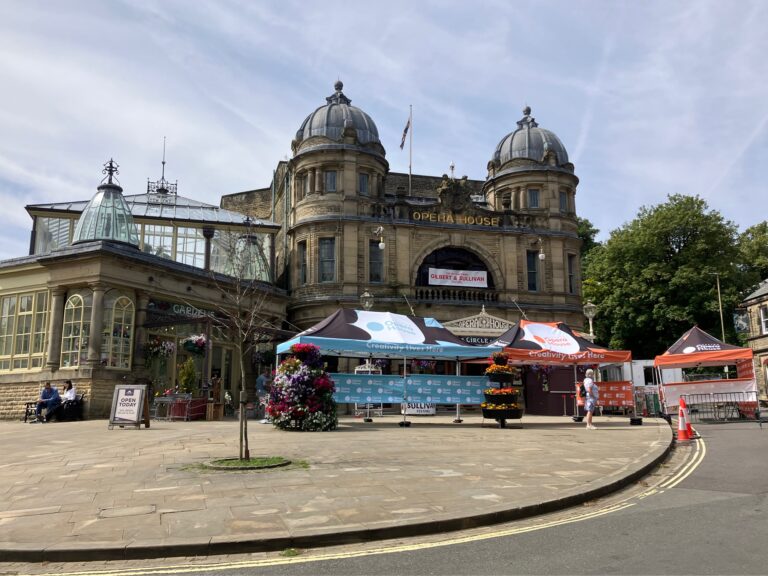
The council identified significant public benefits in plans by the authority, which owns the freehold title to the Buxton Opera House, at The Square, to renovate and future-proof this building to ensure its structural integrity and to prevent water damage.
Ben Haywood, Head of Development Services at the council, told the meeting: “It’s considered the works are essential for the longevity of the building to allow it to continue in its optimum use as a theatre and enable the reinstatement of the lantern.”
A council report stated the works will sustain the historic fabric of the listed building as well as the wider Conservation Area and preserve the setting of the nearby designated park and garden.
The Opera House, which was designed by Frank Matcham and was constructed between 1901 and 1903 and was restored in 1979, is a Grade II listed building within the Grade II Registered Historic Pavilion Park and Garden and the Buxton Central Conservation Area.
It was once used as a cinema before being converted back to a theatre in the 1970s.
The building is famed for its beautiful curved structures, columns, ornate canopy, lanterns, glazed and Venetian windows.
But the latest project will involve retaining or replacing the flat, asphalt roof elements of the building as well as working on the building’s upstands and lantern.
The committee voted in favour of approving the roof works, repairs and replacements with insulation and waterproofing and alterations to support the future re-instatement of original design features.
Plans also include installing roof upstands to facilitate the future installation of louvered external natural ventilation outlets and to show the original lantern.
Mr Haywood explained there are plans to restore the original ventilation system to make the building more sustainable but the first stage will involve improvements to the roof.
Buxton Opera House has undergone renovations during the last ten years including re-pointing and renovation to external walls, new roof repairs and covering, painting, steel work to the existing roof structure, a new boiler and boiler flue and a refurbishment and demolition asbestos survey.
A council spokesperson stated: “The application seeks to undertake necessary roof repairs while future-proofing the works for upcoming conservation projects to the building.
“These works will repair the existing failing roof, and allow for Matcham’s original ventilation features to be reinstated at a future date which will allow for the future enhancement of the Listed Building.”
The council’s Conservation Officer and Buxton Civic Association raised no objections to the scheme and Historic England supports the project.
Council planning policy states the authority and its partners will continue working to establish Buxton as England’s leading spa town and consolidate its role as the principal service centre for the Peak District.
A council spokesperson added: “The development would help to safeguard the building for generations to come and as such is judged to provide a notable public benefit which would offset any minor and less than substantial harm upon the historic interest of the listed building.”
The committee voted in favour of granting Listed Building Consent for work at the Opera House subject to it being carried out within three years in accordance with approved plans.
They also approved Listed Building Consent for applicant Nestle Waters UK Ltd to alter and extend the hygiene room system at the Natural Mineral Baths, at The Crescent, subject to conditions including the work being completed within three years.
This relates to the Grade II Listed Natural Mineral Baths next to and associated with the Grade I Listed building The Crescent which is also a hotel and of significance because the council is the site’s landowner.
These works involve new hygiene surfaces in all rooms, corridors and service areas including new hygiene doors and frames, ground work, new floor drainage and vision panels to ensure historic tiled walls are not only preserved but can continue to be viewed.
Mr Haywood told the meeting this building forms a bath and an an area with a water source and a collection tank from where Nestle Water can collect mineral water before its piped up to Waterswallows and bottled.
He added that the work aims to upgrade equipment that is coming to the end of its life to meet hygiene and health and safety requirements while ensuring the building’s historic features are maintained where possible.
Derbyshire County Council’s archaeology team stated the Natural Baths are the most probable location of the Roman baths at Buxton, although some evidence may have been lost during more recent activity on the site from the construction of The Crescent in the 1780s onward.
Historic England, which supports the work, stated the Grade II listed Natural Mineral Baths are principally significant as a fine Victorian former bath house built on a site believed to have once been home to ancient Roman baths, before becoming Georgian baths.
It added the baths were designed by Henry Currey in 1851-53 and the hydropathic facilities were altered in the 1920s for use by wealthy gentlemen and include a surviving 1920s style interior.
Mr Haywood said: “Overall, there will, of course, be some limited harm to the historic significance of the building because essentially we are having a modern intervention… but where there is less than substantial harm that needs to be balanced against the public benefits of the scheme.”
The committee approved the works for the baths after considering officers’ recommendations that they represent a sustainable form of development with significant public benefits outweighing any harm to the historic significance of the building.