
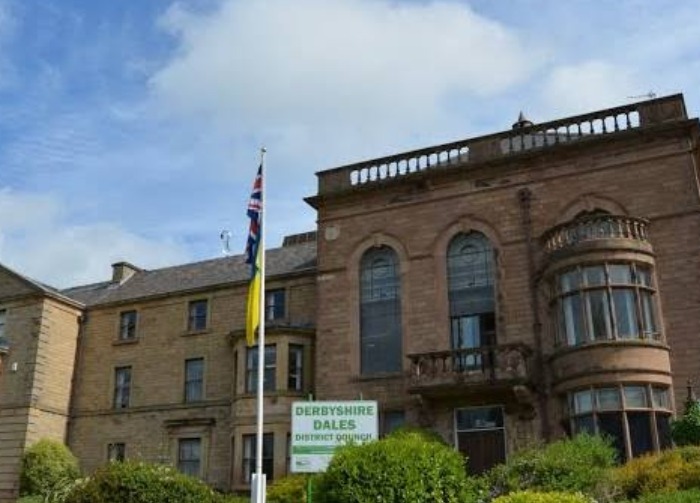
Derbyshire Dales District Council has chosen not to submit its proposals for Local Government Reorganisation with the county’s other nine main councils after its members were unable to endorse the case for change due to a ‘lack of confidence in the net positive benefits’ for communities.
The Labour Government is aiming to set up single, unitary authorities across England with an elected mayor in two-tier authority areas like Derbyshire as part of Local Government Reorganisation plans by scrapping and merging city, county, borough and district councils.
Derbyshire County Council has proposed one single council for Derby and Derbyshire while seven of the district and borough councils and Derby City Council have proposed variations on a ‘One Derbyshire, Two Councils’ model with one northern authority and one southern authority.
A Derbyshire Dales District Council spokesperson stated: “Due to Member concerns about the imposition of Local Government reform, a lack of confidence in the net positive benefits it will deliver to communities and the financial assumptions underpinning the case for change, Derbyshire Dales Members were unable to endorse the case for change ‘front end’ and therefore were not in a position to respond positively to the invitation to submit a proposal for Local Government Reorganisation in Derbyshire.”
Derbyshire Dales District Council had indicated its preference, known as A1, for NE Derbyshire, Chesterfield, Bolsover, High Peak, Derbyshire Dales and part of the Amber Valley to be in one northern unitary council, and Derby City, Erewash, South Derbyshire, and part of Amber Valley to be in a southern unitary council.
The council had participated in shaping the ‘One Derbyshire, Two Councils’ proposal submitted before the November 28 deadline by Derby City Council and the other seven district and borough councils to reduce the number of local authorities in the county from ten to two but at the eleventh hour it opted to stall and write to the Secretary of State for Housing, Communities and Local Government with its concerns.
However, in the letter to MP Steve Reed, the council stated that should the Secretary of State be minded to progress with proposals for Local Government Reorganisation in Derbyshire, the council has still identified a preferred option, which is Option A as a ‘base option’, requesting modification to Option A1 as outlined.
A Derbyshire Dales District Council spokesperson said: “This option would see Derbyshire Dales in the proposed northern authority, together with Bolsover, Chesterfield, High Peak, North East Derbyshire and Amber Valley parishes north of Belper.
“Our letter also advocates significantly increasing councillor representation in the two proposed unitary authorities beyond the levels indicated by the Local Government Boundary Commission for England in the case for change submission.”
Leaders of the other seven of Derbyshire’s district and borough councils and the Leader of Derby City Council claim two new unitary councils will: Keep the councils connected to local residents and their needs; Provide effective value for money services; Transform services like adult care, children’s services and SEND while preserving local identity and protecting Derbyshire’s historic boundaries and meeting the Government’s criteria for reorganisation.
They also argue two unitary councils will provide high quality and sustainable public services working together to understand and meet local needs, and this system will create opportunities for stronger community engagement and neighbourhood empowerment, improve efficiency, capacity and financial resilience and support devolution.
Chesterfield Borough Council Leader, Cllr Tricia Gilby, said: “It is a proposal that aims to recognise and protect Derbyshire’s distinct cultural, geographic and economic identities by developing two new partner unitary councils that are big enough to be financially resilient and deliver at scale, yet close enough to understand and respond to local needs.”
These councils claim the proposed ‘One Derbyshire, Two Councils’ forecasts greater accumulative savings of up to £167m by the sixth year, and despite estimated savings of just £4.4m in its first year these are expected to rise to £44m per annum in its sixth year.
They have also argued one unitary authority for Derbyshire will not work because of the size of the county but a system with a north council and a south council will maintain the historic areas of the county and provide better opportunities to work in partnerships especially with the EMCCA.
Their leaders have also argued one, single unitary authority would create an inefficient delivery of services, would stifle economic and housing growth and create a disparity between Derbyshire and Derby in terms of population and tax base.
The city, borough and district council leaders claim two new unitary councils will keep the councils connected to local residents and their needs, provide effective value for money services, preserve local identity and protect Derbyshire’s historic boundaries and meet the Government’s criteria for reorganisation.
A spokesperson for the city and seven district and borough councils said: “The needs of our communities – now and in the future – are at the very heart of our approach to simplifying and transforming how we deliver local services.
“Local Government Reorganisation is a hugely complex issue with a lot to consider, but this is a once-in-a-lifetime opportunity to redesign and modernise council services so that they better meet the needs of our residents and businesses whilst maintaining the integrity of the county of Derbyshire and its world-renowned cultural, heritage and environmental assets.
“Our ambition is to deliver more effective and efficient services, especially those relating to adult care, children’s services, SEND and homelessness, while also working with the Mayor of the East Midlands and the East Midlands Combined County Authority to attract significant fresh investment in housing, transport, and infrastructure – to further strengthen Derbyshire’s economy and create job opportunities for local people.”
However, Derbyshire County Council claims one single council for Derby and Derbyshire will save more money and create less division than the city, borough and district councils’ ‘One Derbyshire, Two Councils’ proposal.
County Council Leader, Cllr Alan Graves, said creating a single unitary council is in the best interests of all residents and businesses and it would save millions of pounds every year compared to the current system of Local Government and options for creating two unitary councils.
He has also argued that it would cost less to set up and would be less disruptive as major county council services such as adult care and highways would not need to be separated out over two areas which he says would be more costly.
The county council claims that one single unitary council will create more savings of at least an estimated £144 million over six years and £45.1m every year afterwards.
It claims a single council option is the most cost-effective by comparison with its considered option for two councils which had included a saving of at least an extra £100m over the first six years and at least an extra £20m every year thereafter.
The county council claims there are a number of benefits under a single council including: Larger savings to support long-term running of essential services; One budget, one responsibility and clearer accountability; Simpler, fairer, and more responsive services; Continuation of essential services particularly those with high demand and costs such as adult social care, children’s social care, highways and transport, public health, and waste disposal; Easier to work with public sector partners like the NHS, police and EMCCA; Greater efficiency; Supports economic growth by linking housing, transport, skills, and business needs; Greater ability to attract investment, jobs, and regeneration; And it protects boundaries and identity.
The county council argued that a two-council system will create a number of disadvantages including: A geographical split that lacks public support; Difficult to set up while causing disruption with essential services split in two; Difficult boundaries for Derbyshire Dales and Amber Valley; Risks diluting Derby city’s identity and undermining its delivery expertise; And smaller areas of Local Government have less flexibility to meet housing demands.
Cllr Graves said: “From the analysis we’ve carried out and the feedback we’ve received, we believe that creating a single unitary council covering the whole of Derby and Derbyshire is in the best interests of all residents and businesses in the area.
“Creating one new council would save millions of pounds every year compared to creating two unitary councils and would cost less to set-up. It would also be less disruptive as major county council services such as adult care and highways would not need to be separated out over two areas – which would be more costly as our financial analysis shows.
“Derbyshire and Derby City share a proud identity, strong communities, and a forward-looking spirit. Our rich history is part of what makes this area the place we all know and love and one council would unite Derbyshire and retain our proud and deep-rooted identity instead of splitting the county in two.”
Derbyshire’s Derby city, district and borough councils’ ‘One Derbyshire, Two Councils’ proposal includes four variations with differing options, dubbed A, A1, B and B1, selected by each of these councils relating to different sizes, populations and north-south boundary lines.
NE Derbyshire and Bolsover opted for A1 for NE Derbyshire, Chesterfield, Bolsover, High Peak, Derbyshire Dales and part of the Amber Valley to be in one northern unitary council, and Derby City, Erewash, South Derbyshire, and part of Amber Valley to be in a southern unitary council.
Chesterfield, High Peak, Erewash and Derby City opted for B1 with Chesterfield, NE Derbyshire, Bolsover, Derbyshire Dales, High Peak and a slightly different part of Amber Valley to be in the northern council while the southern council would include Derby City, Erewash, Southern Derbyshire and a slightly different part of Amber Valley.
Amber Valley has opted for option A for Chesterfield, NE Derbyshire, Bolsover, High Peak, Derbyshire Dales and Amber Valley in the northern council and a southern council area including Derby City, South Derbyshire and Erewash.
South Derbyshire has opted for option B for Chesterfield, NE Derbyshire, Bolsover, Derbyshire Dales and High Peak in the northern council and the southern council would include Derby City, Erewash, South Derbyshire and Amber Valley.
The Government is expected to carry out a statutory consultation on all submitted proposals early in 2026 and it will review all council proposals before making a final decision on how Local Government is best reorganised in Derbyshire in the summer of 2026.
Under the Government’s current timetable, elections to the new shadow authorities would take place in 2027, and the new unitary councils would start to operate by April 2028.
The UNISON union has stated that LGR in Derbyshire must be about levelling up communities and strengthening public services with proper funding and protection for employees and not about cutting costs or putting jobs at risk.
The Government has argued LGR will include elected mayors with more powers on planning and transport and that the changes will create savings, create greater efficiency, improve public services, and support economic growth.
But critics are concerned about the loss of councils – with Derbyshire reduced from 447 councillors to 162 – the loss of local control with a risk of greater Government influence, the removal of local decision-making, tax increases, powers being taken away from communities and doubts about whether the plans will create savings.