

Report by Local Democracy Reporter – Jon Cooper
Bolsover District Council planners have agreed to allow a significant reduction in infrastructure contributions worth around £2million from developers to finally give the go-ahead for 547 new homes as part of a large new housing scheme despite objections from residents.
Developers faced public criticism over plans to reduce their infrastructure contributions for the latest phase of a large housing scheme originally for around 950 properties on land between Welbeck Road and Oxcroft Lane, in Bolsover, after they claimed the development would not be viable without cutbacks.
The overall scheme had already been granted conditional planning permission by the council’s planning committee but matters stalled after developers Persimmon Homes and Strata Homes submitted a further application under the scheme’s latest phase for 547 of the properties with joint-applicant Stancliffe to reduce their Section 106 infrastructure contributions.
Resident Lewis Hardy, of Bolsover, said: “When planning approval was first granted, it was based on a set of clear commitments and obligations designed to ensure fairness, community benefit, and balance between profit and public interest.
“These commitments were integral to securing public support and regulatory approval. It is deeply concerning that Strata and its associated companies are now seeking to reduce or amend those commitments.
“These organisations have already achieved substantial profit margins from the development, and any attempt to dilute previously agreed obligations appears to be an opportunistic effort to increase profits further at the expense of the community and the integrity of the planning process.”
Outline planning permission for the overall residential development originally for around 950 homes, an extra care facility and an infant school was granted at the site in October 2017.
And the council’s planning committee agreed at a meeting on January 21 to modify the developers’ S106 agreement to accept and secure £5,235,408.84 of contributions towards new infrastructure with reduced site plans for two associated projects including an extra care facility or affordable housing, and a park, instead of insisting on an original request of around £7,353,649.
The local planning authority’s viability expert indicated through their modelling that the development is not capable of providing the approved level of developer contributions with a 17.5per cent profit on revenue.
A council spokesperson stated: “It is clear through viability testing that the proposed development would not be a viable proposition based on national guidance on reasonable developer profit margins, i.e. 17.5per cent.”
The reduced contributions, according to a council report, would still allow for the delivery of housing at the expense of the developers’ profits while meeting housing needs and delivering critical infrastructure.
The committee subsequently agreed for the developers to contribute £104,638 for Elmton Lane improvements, £3,528,988 towards a new school, £335,046 for road network improvements, £712,598.78 towards primary education, and £554,138.06 towards secondary education which is all still expected to eat into the developers’ profits.
Councillors have also accepted plans to reduce the proposed town park land area from 4.2hectares to 3.6hectares and the proposed extra care facility land or space for affordable homes from one hectare to 0.8hectares and other outstanding financial contributions are to be deferred following further viability reviews at appropriate stages.
As many as 48 representations were received during an original consultation for the housing scheme with concerns about the strain on services and infrastructure and the impact on highways, and the council also received 27 objections during a recent consultation into the planned reduction in the developers’ S106 contributions.
Resident Julie Gillies, of Bolsover, fears a reduction in S106 infrastructure contributions will negatively affect schools and elderly care and poses a risk of reduced community cohesion.
Nick Clarke, also of Bolsover, said: “These legally binding agreements are meant to mitigate the impact of new developments, ensuring developers contribute to community needs, such as affordable housing, infrastructure, public open spaces and local amenities.
“It would seem that the developers are now attempting to not honour that agreement purely to increase their profit margins at the expense of the residents of Bolsover.”
The applicant clarified some primary and secondary school place contributions had already been paid or invoiced and that the total secondary education contribution based on a revised number of homes resulted in a reduction in the primary education contribution and an agreement to provide a secondary school contribution of £554,138.06.
A viability expert for the council also concluded the development is able to provide developer contributions in excess of the Travel Plan and Elmton Lane road improvement contributions and around £1m towards other planning obligations not including the town park, primary school and the extra care facility or affordable housing.
Bolsover District Council’s independent viability expert CP Viability Ltd agreed with the applicant that the scheme cannot viably support any onsite affordable housing but CPV’s’ ‘modelling’ had also claimed the scheme is able to viably support S106 contributions of £7,408,709.
Developers are ordinarily expected to make Section 106 contributions towards infrastructure such as education, care and medical facilities, parks, roads and affordable housing to mitigate against the impact of an increased population but requests to reduce contributions can be considered if the added costs make schemes unviable.
Persimmon, Strata and Stancliffe have pointed out that they are still committed to delivering extensive S106 infrastructure needs.
These include land for the planned extra care facility or affordable housing, serviced land for the primary school, Elmton Lane improvements, a town park, a Travel Plan, open space areas, a new link road, demolition of properties at Longlands and construction of new properties to rehome Longlands residents.
A viability assessment, on behalf of applicants Persimmon, Strata and Stancliffe, stated that the original scheme was not considered viable in planning terms after identifying a deficit and it was unable to contribute towards further planning obligations including those in the form of affordable housing and other S106 contributions.
The assessment also stated the key issues facing the proposed development include the significant strategic infrastructure costs and the relationship between development costs and revenues following a recent period of high build cost inflation.
However, the assessment argued that the developers’ ambition is still to ensure this site delivers a high quality residential, mixed-use development with a substantial quantity of new housing and green infrastructure.
PB Planning, on behalf of the applicants, also stated that since the original overall scheme’s planning application was considered in 2017 it has been appropriate for the land to be reviewed with the delivery of the remaining phases of the development.
The applicants therefore requested modifications including reducing the site for the care facility or affordable housing, according to PB Planning, who have also argued that there would be no issues associated with the ability of this proposed area to deliver 30 affordable homes in the future if required.
The previous scales were also calculated on the original overall plans for 950 homes and the new town park space meets the demands of new plans for around 811 homes, according to PB Planning, and there will be a slight increase in the scheme’s overall greenspace.
Ferne Hibbins, of Bolsover, had argued the developers’ own figures show combined earnings of £163.4m and a profit of £28.6m and if developments can generate so much profit she feels the developers should honour commitments that were key to the scheme’s original approval.
Campaigner Dom Webb also said the developers’ application to alter its S106 agreements should be refused to uphold the Local Plan, National Planning Policy Framework, and National Planning Practice Guidance, and to ensure sustainable development and policy compliance.
Councils, including Bolsover District Council, have previously been willing to reduce or change S106 arrangements to ensure housing schemes remain viable for developers so that they can be completed particularly at the moment when there is a national housing shortage.
Residents previously raised concerns that the application for 547 homes as part of the wider housing scheme would also lead to over urbanisation with an impact on wildlife and roads with increased traffic congestion and safety hazards.
But following the council’s approval, the new 547 homes will now form the second phase of the existing Castle Walk development where more than 200 homes have already been built.
The developers say they will invest more than £5.2m into the local community, including land for a new primary school, improvements to transport infrastructure and local public open spaces and a new town park will also be delivered by Persimmon.
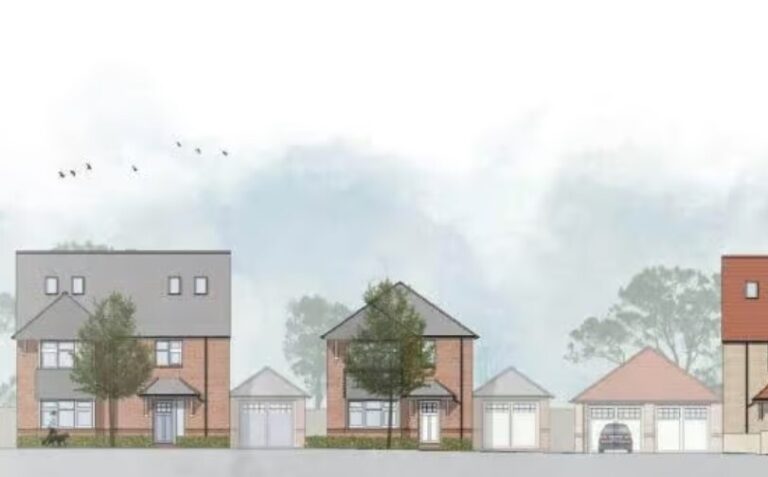
The development aims to offer a mixture of homes, ranging from two to five bedroom properties made up of bungalows, semi-detached, and detached homes.
Head of Planning, George Breed, for Persimmon Nottingham, said: “We are delighted the next phase of the Castle Walk development has been approved by councillors.
“This latest phase will provide a wide range of house types and sizes alongside significant funding for local services and infrastructure.
“We’re looking forward therefore to bringing these plans to fruition which we’re sure will prove extremely popular with local home buyers.”
The planning committee also approved reserved matters, subject to conditions, relating to open space, a spine road, the application, design issues, bin storage, highways surface water, an archaeology investigation, landscaping noise, drainage plans and the infrastructure.