

Report by Local Democracy Reporter – Jon Cooper
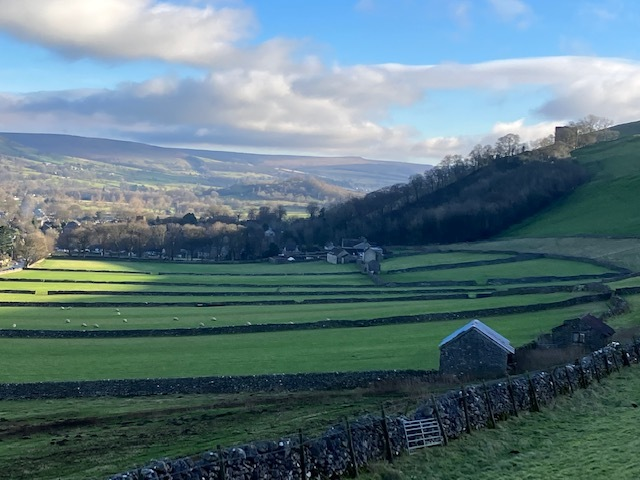
Pictured Is Derbyshire’s Peak District, Near Castleton, Which Is At The Western End Of The Hope Valley
Derbyshire residents are being invited to events in Buxton and the Hope Valley on a proposed multi-million pound scheme for a massive underground carbon capture pipeline aimed at securing jobs and protecting the environment by using Peak District lime and cement works to capture, transport and store carbon dioxide.
Peak Cluster, which is a collaboration between cement and lime producers in Derbyshire and Staffordshire, has outlined plans for a £59.6m project that aims to build a 121 mile underground pipeline to carry captured carbon dioxide from four cement and lime producers across sites in Derbyshire and Staffordshire out to the Irish Sea.
Chartered surveyors and planning consultants Wilson Fearnall are already encouraging engagement with the consultation among landowners, farmers and residents and some in Derbyshire’s Hope Valley have already raised concerns.
Laura Stark, of Hope Valley, said: “Residents are angry and frightened, with many posed with the threat of losing their homes, land, and farmland to a big business venture masquerading as environmentalism.
“Peak Cluster plan to dig a ‘124 miles’ CO2 pipeline from the Peak District out to the Irish Sea, through the Wirral, and pump CO2 into the seabed. This is not a good thing.”
But Peak Cluster has stated it aims to oversee the project to capture carbon dioxide from four cement and lime producers across sites in Derbyshire and Staffordshire to help to secure the future of Britain’s cement and lime industries while safeguarding and creating jobs and ensuring a reliable, ‘homemade’ supply of essential materials.
Proposed work plants in the scheme include Buxton Lime’s Tunstead lime plant, at Tunstead Quarry, off Waterswallows Rd, in Buxton, Breedon’s Hope cement plant, at Pindale Road, in the Hope Valley, Tarmac’s Tunstead cement plant, at Waterswallows Road, Tunstead House, in Buxton, and Holcim’s Cauldon plant between Cauldon and Waterhouses villages in Staffordshire.
If approved, the plans will see carbon dioxide transported and stored permanently beneath the East Irish Sea which Peak Cluster claims will help to secure the future of Britain’s cement and lime industries while safeguarding and creating jobs and ensuring a reliable, ‘homemade’ supply of essential materials.
This supply of essential materials would include building material for the UK’s hospitals, homes, rail and essential minerals to purify tap water and maintain healthy soil to graze animals and grow crops.
Peak Cluster says the scheme will use carbon capture technology to lock away carbon dioxide emitted at Holcim’s Cauldon plant, Tarmac’s Tunstead cement plant, Buxton Lime’s Tunstead lime plant and Breedon’s Hope plant which will help secure the future for 40per cent of the nation’s cement and lime industries.
Spirit Energy’s Morecambe Net Zero project, which plans to transform gas fields in the Irish Sea into carbon dioxide storage sites, and Peak Cluster are expected to work together to jointly safeguard and create 13,000 jobs by 2050, according to Peak Cluster, with around 1,500 jobs created across the East Midlands and North West during construction.
John Egan, CEO of Peak Cluster Ltd, has said: “Peak Cluster is focused on securing a sustainable future for the cement and lime industry. Together with the Morecambe Net Zero Project, the UK’s biggest carbon store, we will capture, transport and store CO2 to support industry to thrive in a low carbon future.”
Peak Cluster says that cement production is responsible for 7.5per cent of global CO2 emissions but it claims its plans will prevent over three million tonnes of CO2 from entering the atmosphere each year while strengthening the industry’s resilience and opening up new opportunities for growth.
Derbyshire County Council said it has been keen to take part in Peak Cluster’s first consultation launched on January 12 and ending on February 27 and the Peak District National Park Authority says it also aims to continue to be actively involved in the process hoping to balance the benefits of carbon capture against any potential impact to the national park.
The consultation is giving organisations, landowners and residents an opportunity to address any issues at an early stage including the potential impact the pipeline may have on land titles and property sales and the exact pipeline route and the location of any Above Ground Installations.
Section 1 of the scheme includes the Breedon Hope Cement Works with a newly-built capture facility and a pipeline carrying captured CO2 to the North Feeder Above Ground Installation to the south of Chapel-en-le-Frith.
Section 2 would feature a Tarmac Tunstead Cement Works capture facility, and a Buxton Lime capture facility, located at Tarmac’s Tunstead site, to the north east of Buxton, in Derbyshire with a pipeline to the Chapel-en-le-Frith North Feeder AGI.
Section 3 includes a pipeline which runs from the Chapel-en-le-Frith North Feeder AGI to a Central Feeder AGI, south west of Macclesfield.
Section 4 includes the Holcim Cauldon capture facility, in Staffordshire, and a pipeline which passes north of Leek and Congleton before reaching the Macclesfield Central Feeder AGI.
Section 5 will run from the Central Feeder Macclesfield AGI to an AGI in Holmes Chapel, to Section 6 from Cranage to Tarporley, with Section 7 from Tarporley to Picton, and Section 8 from Picton to Ellesmere Port.
Section 9 will run from Willaston to The Wirral before Section 10’s offshore pipeline runs from Leasowe on the north coast of the Wirral.
Some areas may not see the pipeline buried, according to Planning Inspectorate documents, including some places passing by some roads, railways or ancient woodland.
Peak Cluster recognises the production of cement and lime generates CO2 which it says is the single largest contributor to climate change and with 40per cent of all British cement produced in Staffordshire and Derbyshire it says the industry accounts for as much as 23per cent of the counties’ CO2 emissions.
But Peak Cluster aims to use carbon capture technology to lock away CO2 emitted at Holcim’s Cauldon plant, Tarmac’s Tunstead cement plant, Buxton Lime’s Tunstead lime plant and Breedon’s Hope plant which its says will be safely transported in an underground pipeline to the Morecambe Net Zero central CO2 storage facility, operated by UK energy company, Spirit Energy.
Peak Cluster Chief Executive Officer, John Egan, has said the Peak Cluster scheme will be the world’s largest cement and lime decarbonisation project and it will be important for Staffordshire and Derbyshire’s economy helping to protect vital industries and skills, creating a shared clean-growth corridor, accelerating decarbonisation and driving regional prosperity.
Those interested in taking part in the first of the two planned consultations or wishing to contact the project team, can visit www.peakcluster.co.uk
Peak Cluster has also been holding in-person events across the affected areas since January 24 and it is holding one at St Anne’s Community Centre, on Hardwick Street West, in Buxton, from 12pm to 5pm, on February 10, and at Hope Bradwell Memorial Hall, on Netherside, in Bradwell, in the Hope Valley, from 11am to 5.30pm, on February 12.
According to Planning Inspectorate documents, the proposed pipeline corridor is to be 300 metres wide and 121 miles long, but this would eventually be narrowed down to 100 metres in width to allow for adjustments while the actual pipes would be around a metre wide.
The depth at which the pipe is buried will be decided at a later date and will include sign-offs from the Environment Agency and other bodies to determine how far beneath watercourses it needs to be, according to the documents.
Derbyshire local authorities expected to have an interest in the scheme include Derbyshire County Council, Derbyshire Dales District Council, High Peak Borough Council, the Peak District National Park Authority and the East Midlands Combined County Authority.
But due to the massive scale of the project, which is expected to take three years to build across four counties, the scheme is to be decided nationally, with councils merely acting as consultees alongside residents, interest groups and businesses.
Once the proposals – for what Peak Cluster has described as a ‘nationally significant infrastructure project’ – are finalised, Peak Cluster aims to submit a Development Consent Order application in 2027 for Government approval.
The Government has agreed to award £28.6m towards the estimated £59.6m project with the remaining funding for the scheme to come from private firms, according to Planning Inspectorate documents.